By aqadvisor / July 14, 2026
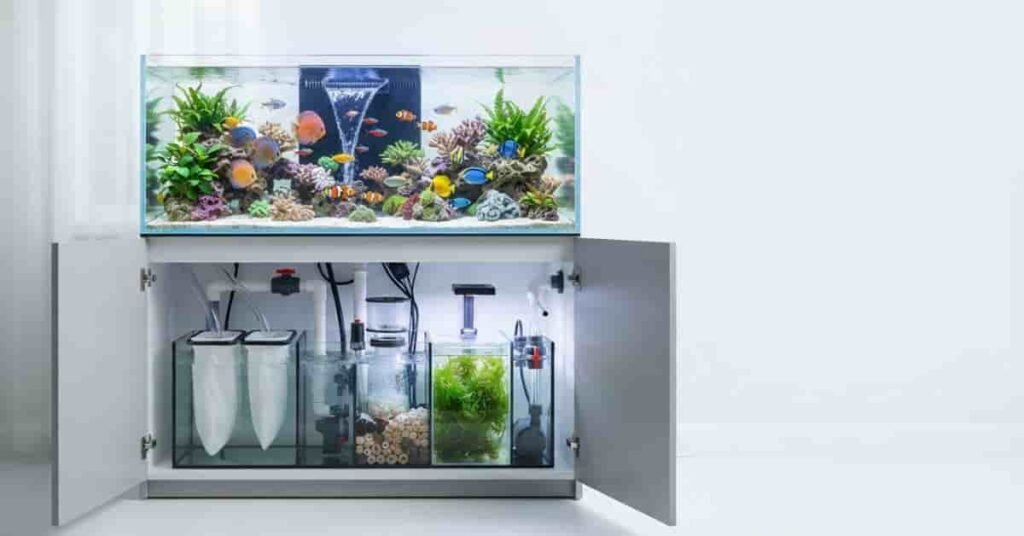
Table of Contents
- Introduction
- What Is an Aquarium Sump?
- Do You Need a Sump?
- Types of Aquarium Sump Systems
- Equipment Needed for an Aquarium Sump Setup
- How to Set Up an Aquarium Sump (Step-by-Step)
- Saltwater Aquarium Sump Setup
- Freshwater Aquarium Sump Setup
- Recommended Aquarium Sump Chamber Layout
- Best Return Pump Size
- Common Aquarium Sump Mistakes
- Conclusion
Introduction
Have you ever wondered why experienced aquarists keep crystal-clear tanks with healthier fish and corals?
An aquarium sump setup is one of the best upgrades you can make for better filtration and stable water conditions. While it may seem complicated at first, beginners across the USA can successfully install a sump with the right guidance. Whether you’re planning a freshwater aquarium sump setup or a saltwater aquarium sump setup, understanding the basics will help you avoid common mistakes and build a more reliable system.
In simple terms, a sump is an extra tank placed below your main aquarium. It increases water volume, hides equipment, and improves filtration. That’s why many experienced hobbyists rely on sump systems for cleaner, healthier aquariums.
This guide explains everything step by step, from choosing the right equipment to installing plumbing and adjusting water flow. You’ll also learn how sump systems work, whether you need one, how to maintain it, and how to troubleshoot common problems. By the end, you’ll have the confidence to build a sump system that keeps your aquarium running smoothly for years.
What Is an Aquarium Sump?

An aquarium sump setup uses a separate tank, usually placed inside the aquarium stand, to improve filtration and increase total water volume. Water leaves the display tank through an overflow, passes through different filtration stages inside the sump, and returns through a pump. This continuous cycle keeps the aquarium cleaner and more stable.
Choosing the right filtration system is an important part of any successful aquarium setup. Our Aquarium Filter Setup Guide explains how to choose, install, and optimize different types of aquarium filters.
Many experienced aquarists choose a sump because it provides more space for filtration equipment than a standard hang-on-back or canister filter. It also keeps heaters, protein skimmers, and other equipment out of sight. As a result, the main aquarium looks cleaner and offers more room for fish, plants, or corals.
A sump works well for both freshwater and saltwater aquariums. However, it is especially popular in reef and marine systems where stable water conditions are essential. If you want easier maintenance and better water quality, a sump is a smart long-term investment.
Expert Tip: Choose a sump that holds at least 20–40% of your display tank’s volume. The extra water helps maintain stable temperature and water chemistry.
How a Sump Works
A sump creates a continuous water circulation system between your display aquarium and a second tank below it. Water first flows through an overflow box or overflow weir. Gravity carries it into the sump, where it passes through several filtration chambers.
The first chamber usually contains mechanical filtration, such as filter socks or filter floss, to remove uneaten food and debris. The next chamber often holds biological media, where beneficial bacteria break down harmful ammonia and nitrite. In a marine aquarium sump setup, this section may also include a protein skimmer or a refugium with live rock and macroalgae.
After filtration, the water reaches the final chamber. A return pump sends the clean water back to the display tank, creating a constant cycle that runs 24 hours a day.