By aqadvisor / August 27, 2026
Table of Contents
- Introduction
- How long does it take to cycle an aquarium?
- Average Aquarium Cycling Timeline
- What Happens During Each Stage of the Cycle?
- How Long Does It Take to Cycle a Freshwater Aquarium?
- How Long Does It Take to Cycle a Saltwater Aquarium?
- Factors That Affect Cycling Time
- Can You Speed Up Aquarium Cycling?
- Signs Your Aquarium Is Fully Cycled
- How to Confirm the Cycle with a Test Kit
- Common Reasons Cycling Takes Longer
- Beginner Mistakes That Delay the Cycle
- Conclusion
Introduction
Wondering how long to cycle aquarium before adding your first fish? You’re not alone. Many beginners expect a new tank to be ready within days. In reality, aquarium cycling takes time because beneficial bacteria need to grow naturally. There is no fixed number of days that works for every setup. Water temperature, filtration, bacteria, plants, and the ammonia source all affect the process. That’s why how long does it take to cycle an aquarium can vary from one tank to another.
The good news is that you don’t have to guess. This guide explains the complete aquarium cycle timeline for both freshwater and saltwater tanks. You’ll learn what happens during each stage, what slows or speeds up the cycle, and how to test your water correctly. By the end, you’ll know exactly when your aquarium is safe for fish and how to avoid the common mistakes that cause delays. A little patience now will help you build a healthy, stable aquarium that thrives for years.
How long does it take to cycle an aquarium?
Most aquariums take 4–6 weeks to complete the nitrogen cycle. The exact aquarium cycling time depends on factors like water temperature, filtration, the ammonia source, and beneficial bacteria. Tanks started with established filter media or bottled bacteria may cycle faster, while brand-new setups often need more time. Instead of counting days, test your water regularly. Your aquarium is fully cycled when ammonia and nitrite reach 0 ppm, and nitrate is present, making the tank safe for fish.
Average Aquarium Cycling Timeline
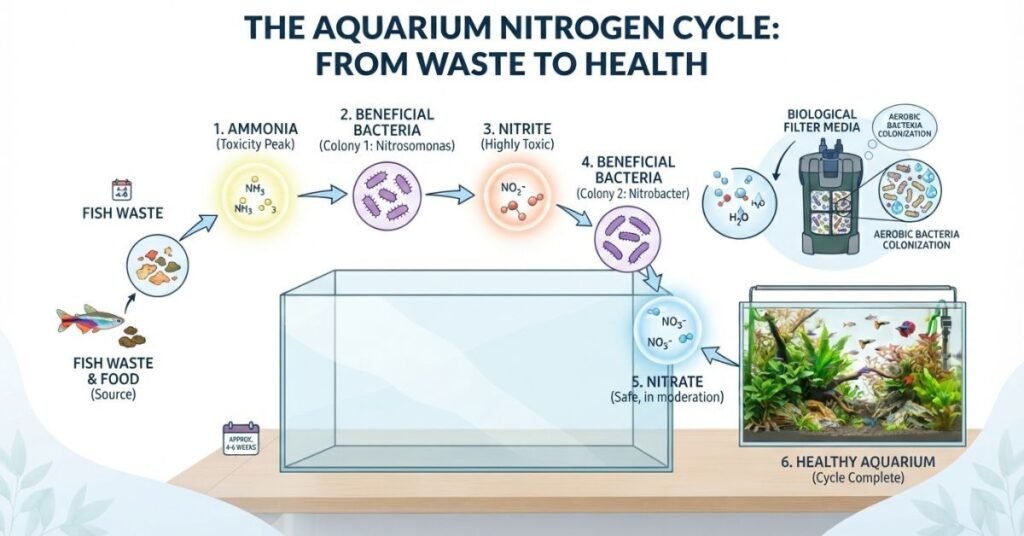
Most new aquariums follow the same general pattern, but every tank develops at its own pace. Beneficial bacteria need time to grow inside the filter and on other surfaces. As these bacteria multiply, they convert harmful ammonia into nitrite and then into the safer nitrate. This natural process explains how long does an aquarium take to cycle and why patience is important.
The timeline below shows what most freshwater and saltwater aquariums experience. Some tanks may move through these stages a little faster, while others may need an extra week or two. Water temperature, oxygen levels, filtration, and the bacteria already present all influence the process. Regular testing gives a more accurate picture than simply waiting a set number of days.
| Week | What Happens |
|---|---|
| Week 1 | Ammonia begins to increase as waste or an ammonia source breaks down. |
| Week 2 | Beneficial bacteria develop, and nitrite starts to appear. |
| Week 3 | Nitrite reaches its highest level while more bacteria continue growing. |
| Week 4 | Nitrate becomes detectable as nitrite levels begin to fall. |
| Week 5–6 | Ammonia and nitrite reach 0 ppm, nitrate remains present, and the aquarium cycle is usually complete. |
Expert Tip
Experienced aquarists rely on water test results, not the calendar. If your test kit still shows ammonia or nitrite, the cycle is not complete, even after six weeks.
What Happens During Each Stage of the Cycle?
The nitrogen cycle happens in three main stages. Each stage supports the next as beneficial bacteria grow inside your filter and on hard surfaces. Understanding these stages helps you know how long does it take to cycle an aquarium and why water testing matters more than counting days.
Most new aquariums move through these stages over 4–6 weeks, although the timing can vary. Temperature, filtration, oxygen, and the ammonia source all affect how quickly bacteria become established. The safest approach is to watch your water parameters instead of following a fixed schedule.
Ammonia Stage
The ammonia stage begins as soon as an ammonia source enters the aquarium. Fish waste, fish food, or pure ammonia produces this harmful compound. Because a new tank has very few beneficial bacteria, ammonia rises quickly during the first week.
Ammonia is highly toxic to fish, even at low levels. During this stage, the first group of beneficial bacteria starts growing. These bacteria feed on ammonia and slowly convert it into nitrite. This natural process takes time, so patience is important.