By aqadvisor / August 28, 2026
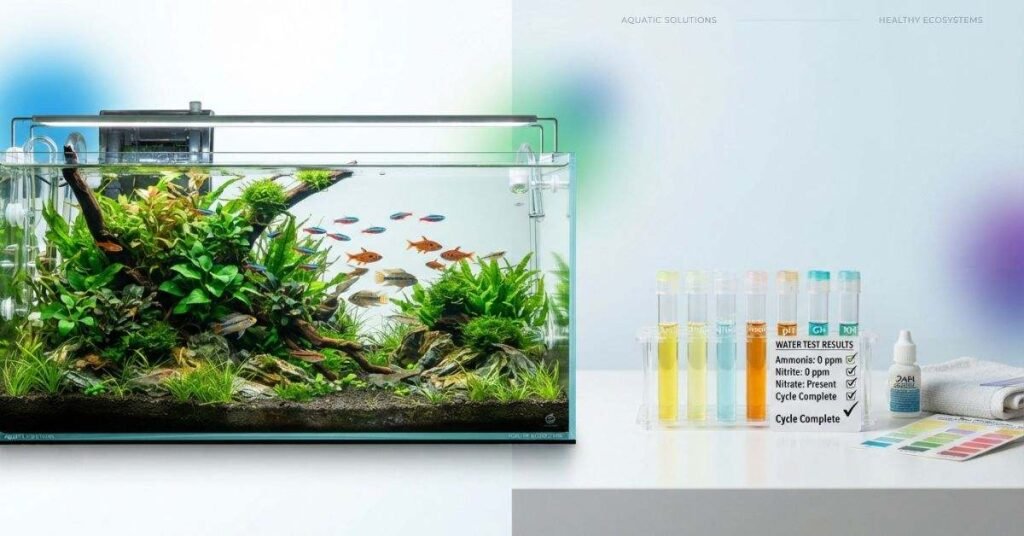
Table of Contents
- Introduction
- How Do You Know When an Aquarium Is Fully Cycled?
- What Does a Fully Cycled Aquarium Mean?
- The Nitrogen Cycle Is Complete
- 7 Signs Your Aquarium Is Fully Cycled
- How to Test if Your Aquarium Is Fully Cycled
- Can You Add Fish Immediately After Cycling?
- Common Signs Your Aquarium Is NOT Fully Cycled
- Common Mistakes When Checking the Cycle
- What to Do If Your Aquarium Isn’t Fully Cycled
- Freshwater vs Saltwater: Are the Signs Different?
- Conclusion
Introduction
Have you ever added fish to a new aquarium, only to worry about whether the water is truly safe?
A clear tank does not always mean your aquarium is ready for fish. Many beginners in the USA make this mistake because they cannot see the beneficial bacteria working inside the filter. Completing the nitrogen cycle is one of the most important steps before adding aquatic life.
Learning how to know when an aquarium is cycled helps protect fish from dangerous ammonia and nitrite spikes. A properly cycled tank creates a safer environment and reduces stress for both new and experienced fish keepers.
In this guide, you will discover the real signs of a cycled aquarium, how to test your water, and when your tank is ready for fish. You will also learn how to avoid common cycling mistakes that can harm your aquarium.
How Do You Know When an Aquarium Is Fully Cycled?
You know an aquarium is fully cycled when it can safely handle waste without dangerous ammonia or nitrite spikes. The main signs include ammonia and nitrite levels staying at 0 ppm, while nitrate is present in the water.
A cycled aquarium has enough beneficial bacteria in the filter and substrate to break down harmful waste. These bacteria convert ammonia into nitrite and then nitrite into nitrate through the nitrogen cycle.
Before adding fish, test your water regularly to confirm stable results. A reliable way to check the cycle is an ammonia challenge. The tank should process an ammonia source within about 24 hours while keeping ammonia and nitrite at 0 ppm.
A clear aquarium does not always mean the cycle is complete. Water tests provide the best proof that your tank is ready for fish.
Key Takeaways:
- Ammonia should read 0 ppm.
- Nitrite should read 0 ppm.
- Nitrate should be detectable.
- Water parameters should remain stable over time.
What Does a Fully Cycled Aquarium Mean?
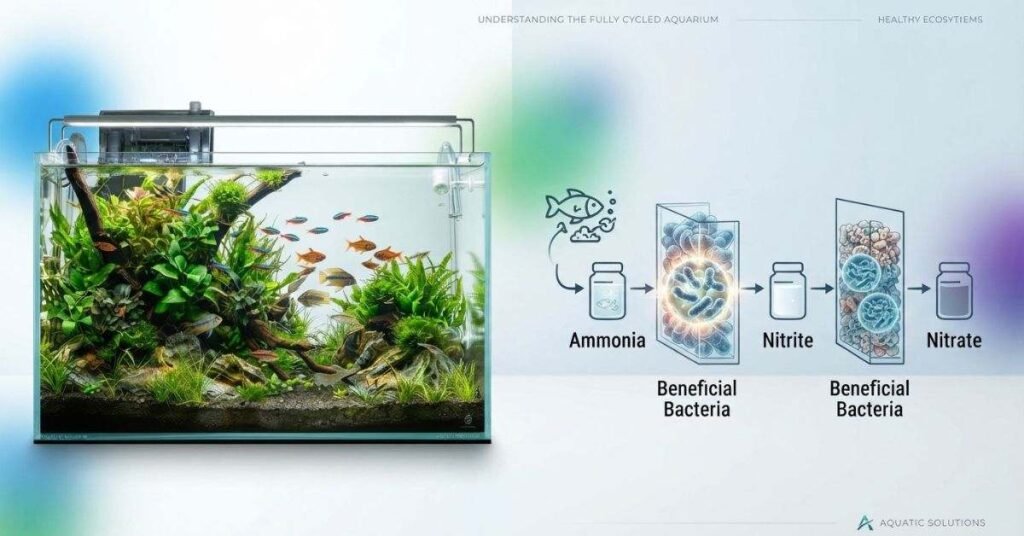
A fully cycled aquarium has an established biological system that safely handles fish waste. The tank contains enough beneficial bacteria to convert toxic ammonia into nitrite and then into less harmful nitrate.
The cycling process creates a stable environment where fish can live safely. Without this process, ammonia and nitrite can build up quickly and stress or harm fish. Many beginners think a new aquarium is ready when the water looks clear, but clear water does not confirm a completed cycle.
A cycled aquarium depends on water test results, not appearance. When ammonia and nitrite stay at 0 ppm and nitrate is present, your tank shows signs of a working nitrogen cycle.
Internal Link Suggestion: Add a link to your guide about the [Aquarium Nitrogen Cycle] when explaining how bacteria process waste.